Application of a digital twin and AI in production planning
Often production processes contain many variables, think: machine availability, changeover times, drying or curing times, product restrictions, packaging lines, and customer deadlines. Human planners can do a lot, but once the number of combinations increases it becomes impractical to find the optimal choice manually (in Excel). Indeed, even fairly simple examples in production planning quickly lead to hundreds of possible scenarios.
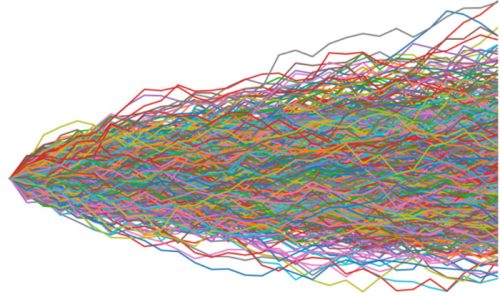
AI in a digital twin combines the power of both technologies: the model simulates thousands (or more) of planning routes, evaluates them against goals (on-time performance, minimum cost, minimum changeover time, least possible waste) and ranks the best options within seconds. With that, you always choose the schedule that is most efficient at that moment.
To illustrate: suppose you produce 10 products, with 2 machine options for production, 5 packaging variants and 3 packaging machines, that already creates 300 possible scenarios. And that does not take into account, for example, special treatments per product or other restrictions. A human planner cannot weigh that.
What does production planning with a digital twin and AI provide?
In Planwisely’s practice, we often encounter the following benefits after implementing a digital twin with AI optimization:
- Lower operating costs: by reducing changeover times (decrease of 5 – 10%), we increase production capacity and extend the technical life of machines.
- Less workload for planners: from manual puzzling to exception management to true optimization. Planners can take targeted action when the AI identifies an anomaly.
- Improved customer satisfaction: because the AI can plan better, delivery reliability is increased (3-5%) and thus customer satisfaction.
- Less waste: (typically a 10% reduction) and thus an increase in sustainability because you use resources more efficiently.
- More and faster innovation: because new product variants or process changes can first be safely tested in the digital twin.
Small percentage improvements in planning often translate directly into leverage in financial gains and CO₂ reductions: less spoilage, fewer residual streams, fewer rush shipments and better machine utilization rates.
Discover the improvement potential in your production environment
A digital twin coupled with AI transforms production planning from guesswork to predictable, continuous optimization. Through scenario analysis, you always choose the planning path that guards delivery times, lowers costs, reduces planner workload and minimizes waste – with direct gains for both operational performance and circularity goals.
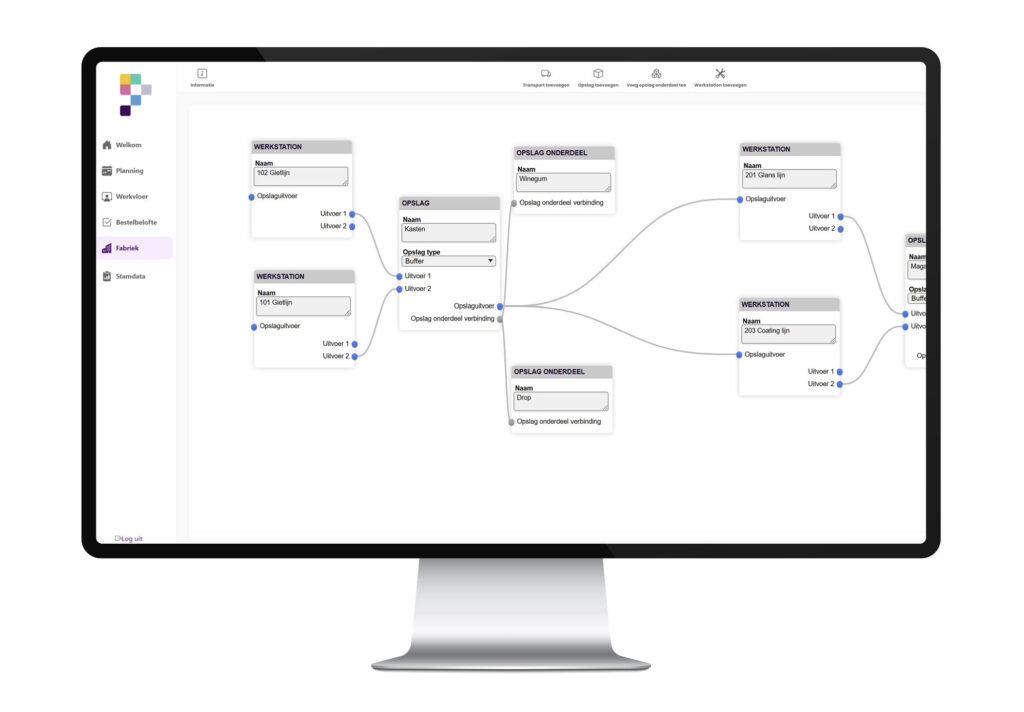
Want to see what this looks like in practice? Planwisely’s Digital Factory makes the digital-twin approach tangible: in a safe, digital environment you test planning scenarios and see the operational and sustainable effects immediately. Schedule a short introduction to discuss the improvement potential within your production environment without obligation, do the impact scan or download our fact sheet.